About Ed Rosen

Ed Rosen used his creativity to express -on canvas and paper- much of what he felt but could not say. The fullness of life and beauty- when it overwhelmed him- dripped from his brush and escaped from his pen without hesitation, creating a body of work that is unimaginable and prolific. His art tells the story of his inner joy and wonder of all things beautiful.
Ed wished to honour the beauty he found in every day life and to capture it to share with anyone that would take the moment to look. There is no doubt about this: Ed Rosen's life's passion was art. In later life, Ed’s dedication was to foster the passion for art in young people. In 2009, Ed Rosen began to nurture a dream of giving the less fortunate young people who were interested in arts -of all kind- the opportunity to express themselves and to be shown support that Ed wished he had when he was a young man. Ed's decision was to arrange to sell his art work upon his passing and a significant portion of the proceeds would be dedicated to helping qualified organizations develop the talents of young people, and allow students to follow their dream.
The Ed Rosen Memorial Scholarship for Students is the result of that fervent desire.
For more information regarding the Ed Rosen Memorial Scholarship, or to donate to the fund, please send an email to :
[email protected]
About Ed's Art:
Ed Rosen's work has been influenced by his midwestern upbringing. He has painted with the artists of Cape Anne, Massachusetts, and it was there that he learned the use of color and light. In the past several years, the Santa Fe influence has inspired a new mood for his landscape paintings.
In the midwest, Ed's reputation has been built around his interpretation of the human figure. These influences come together to form a style that Ed terms "abstract emotionalism."
Growing up in Indiana, Ed's earliest training was at the laboratory school of Ball State University. He later attended Indiana University. After moving to Chicago, his creativity was developed by working some of the area's outstanding teachers in sculpture, printmaking, and painting. His work now shows what he calls the final influence: the written word.
Ed Rosen has been showing his work since 1956. He now lives in Glencoe, Illinois with his wife.
Ed wished to honour the beauty he found in every day life and to capture it to share with anyone that would take the moment to look. There is no doubt about this: Ed Rosen's life's passion was art. In later life, Ed’s dedication was to foster the passion for art in young people. In 2009, Ed Rosen began to nurture a dream of giving the less fortunate young people who were interested in arts -of all kind- the opportunity to express themselves and to be shown support that Ed wished he had when he was a young man. Ed's decision was to arrange to sell his art work upon his passing and a significant portion of the proceeds would be dedicated to helping qualified organizations develop the talents of young people, and allow students to follow their dream.
The Ed Rosen Memorial Scholarship for Students is the result of that fervent desire.
For more information regarding the Ed Rosen Memorial Scholarship, or to donate to the fund, please send an email to :
[email protected]
About Ed's Art:
Ed Rosen's work has been influenced by his midwestern upbringing. He has painted with the artists of Cape Anne, Massachusetts, and it was there that he learned the use of color and light. In the past several years, the Santa Fe influence has inspired a new mood for his landscape paintings.
In the midwest, Ed's reputation has been built around his interpretation of the human figure. These influences come together to form a style that Ed terms "abstract emotionalism."
Growing up in Indiana, Ed's earliest training was at the laboratory school of Ball State University. He later attended Indiana University. After moving to Chicago, his creativity was developed by working some of the area's outstanding teachers in sculpture, printmaking, and painting. His work now shows what he calls the final influence: the written word.
Ed Rosen has been showing his work since 1956. He now lives in Glencoe, Illinois with his wife.

What is Abstract Emotionalism?
By Ed Rosen
February 20, 2004
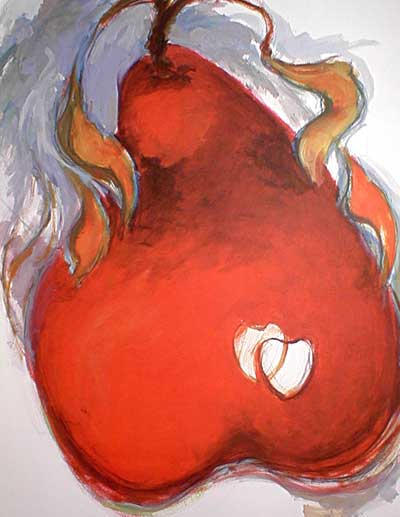
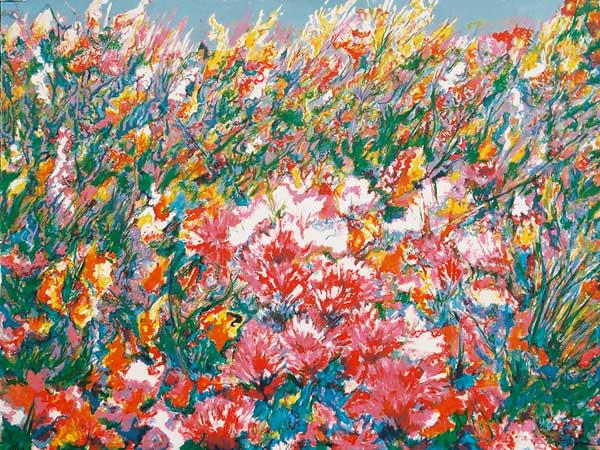
I refer to my works as abstract emotionalism because my goal is to reach an emotion rather than a representation of a subject. If I wanted to produce a realistic view of nature or the human figure, I could accomplish this with a camera.
Each of my pieces has at least 3 coats of paint. My goal at the beginning strokes is to achieve an emotion from within. Then, of course, I hope to help the viewer feel the same response. Inspiring this response in a viewer or collector is, for me, a measure of success. I'm not nearly as satisfied when my work is bought to fill a space � or selected for color, size, etc.
The most important complement I have ever received is "We bought your painting many years ago and still love it."
By Ed Rosen
February 20, 2004
I refer to my works as abstract emotionalism because my goal is to reach an emotion rather than a representation of a subject. If I wanted to produce a realistic view of nature or the human figure, I could accomplish this with a camera.
Each of my pieces has at least 3 coats of paint. My goal at the beginning strokes is to achieve an emotion from within. Then, of course, I hope to help the viewer feel the same response. Inspiring this response in a viewer or collector is, for me, a measure of success. I'm not nearly as satisfied when my work is bought to fill a space � or selected for color, size, etc.
The most important complement I have ever received is "We bought your painting many years ago and still love it."
